

A dry cigar burns hot, tastes flat, and can crack before you even cut it. An over-humidified cigar swells, draws tight, and risks mold. If you want consistent flavor and a clean burn, knowing how to store cigars properly is not optional – it is the difference between wasting good stock and smoking it the way it was meant to be enjoyed.
For most cigars, the target is simple: stable humidity, stable temperature, and as little fluctuation as possible. The problem is that many buyers either overcomplicate the setup or treat cigars like any other tobacco product. Cigars are less forgiving. Premium hand-rolled sticks, infused cigars, and even many machine-made options all respond to moisture and heat in different ways, so your storage method should match what you actually buy and how fast you smoke through it.
How to store cigars properly without overdoing it
The best storage setup is the one that fits your volume. If you keep a few cigars on hand for occasional smoking, a small humidor or a sealed container with a proper humidity pack is usually enough. If you buy by the bundle, box, or mixed assortment, you need more space and better consistency.
The core range most smokers aim for is 65 to 72 percent relative humidity and roughly 65 to 70 degrees Fahrenheit. There is some wiggle room here. A lot of smokers prefer the lower end of that range because cigars burn more evenly and feel less spongy. Others keep certain fuller-bodied or larger ring gauge cigars a little higher. What matters most is not chasing a perfect number every day. It is keeping the environment steady.
If humidity swings up and down all week, cigars expand and contract. That affects burn, wrapper texture, and flavor delivery. The same goes for temperature. Heat speeds up aging in a bad way and can create conditions for tobacco beetles, which is a fast way to ruin an entire collection.
The right humidity and temperature for cigar storage
Humidity controls how much moisture stays in the cigar. Too low, and the wrapper becomes brittle while the filler dries out. Too high, and combustion gets harder, the cigar can taste muddy, and mold becomes a real concern.
Temperature matters just as much. Even a well-humidified cigar can go bad in a warm room. Keep storage away from sunlight, heating vents, radiators, and appliance heat. A closet shelf, cabinet, or interior room usually works better than a windowsill or garage.
If your home runs hot in summer or dry in winter, your storage setup has to compensate. That is where a dependable humidity control product helps. Boveda packs are popular for a reason – they are low-maintenance, predictable, and easy to match to the kind of cigars you keep. For buyers who want quick setup without constant adjustment, that kind of solution makes sense.

how to store cigars properly
Humidor, travel case, or sealed container?
A traditional humidor works well if it seals properly and is sized for what you actually store. Cedar-lined models are common because they help manage moisture and complement cigar aging. But not every humidor on the market performs well. A poor seal turns a nice-looking box into a maintenance problem.
If you only keep a handful of cigars or rotate inventory fast, a sealed plastic or acrylic container can do the job just as well. Many smokers use this approach because it is affordable, simple, and easier to stabilize than a cheap wooden humidor. Add a humidity pack and a calibrated hygrometer, and you have a practical storage setup without extra fuss.
how to store cigars properly
Travel cases are useful for short-term storage, not long-term aging. They protect cigars from crushing and sudden drying while you are on the move, but they are not usually the best place to hold stock for weeks or months unless the case is specifically designed for that purpose.
The trade-off is straightforward. Humidors look better and can age cigars nicely when built well. Sealed containers are more functional and often more stable for everyday buyers who care more about freshness than display.
Seasoning your humidor the right way
A new humidor should be seasoned before you load it with cigars. That means bringing the interior material to the proper moisture level so it does not pull humidity directly from your cigars.
The old method involved wiping down cedar with distilled water, but that can create uneven moisture and warping if done carelessly. A more controlled option is to use a seasoning pack and let the humidor stabilize over several days. It takes longer, but it is cleaner and more reliable.
Once seasoned, add your cigars, place your humidity control inside, and leave the lid closed as much as possible during the first few days. Opening it every few hours to check progress just slows stabilization.

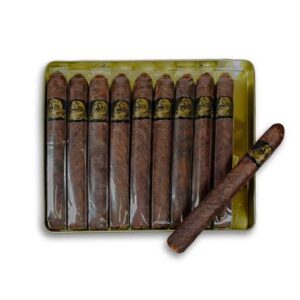
Backwoods Dark Stout Cigars
Why a hygrometer matters
If you are storing cigars without a hygrometer, you are guessing. A cigar may feel soft or dry in the hand, but that does not tell you the actual environment inside the box or container.
Digital hygrometers are generally easier to read and often more accurate than basic analog models. Whatever you choose, check calibration before trusting the number. A bad reading leads to bad adjustments, and then you end up fixing a problem that was never there.
You do not need to obsess over tiny shifts. If your reading moves by a point or two, that is normal. What you are watching for is a trend – too dry for several days, too damp for too long, or repeated swings after every room temperature change.
Storing different cigar types
Not every cigar should be treated exactly the same. Premium hand-rolled cigars usually benefit most from controlled humidity because the tobacco blend and wrapper are more sensitive to environmental changes. If you buy higher-end Cuban or non-Cuban cigars, proper storage protects the flavor you paid for.
Machine-made cigars can be more forgiving, but that does not mean they should be left out in the open. Many still dry out quickly once opened. If they come sealed from the factory and you plan to smoke them fast, short-term storage is less demanding. Once the packaging is broken, they need protection too.
Infused or flavored cigars raise another issue: aroma transfer. If you store flavored cigars beside traditional natural tobacco cigars for a long time, the scents can mix. The same goes for strongly aromatic wraps or specialty tobacco products stored in the same space. If flavor purity matters to you, separate them by type.
Common mistakes that ruin cigars
The biggest mistake is using the wrong moisture source. Tap water should stay out of your humidor. It can introduce minerals, odors, and contamination. Use distilled water if your setup requires water at all.
Another common mistake is overpacking. Airflow matters. If you stuff a humidor full with no room between rows or boxes, humidity distribution becomes uneven. Some cigars stay damp while others dry out.
Frequent opening is another issue. Every time you open the lid, you change the environment. If you are checking your stash multiple times a day, expect more fluctuation.
Then there is storage by convenience instead of condition. A desk drawer, glove box, or kitchen cabinet may seem fine for a while, but those spots tend to swing in heat and humidity. Short-term, maybe. Long-term, no.
Can you recover dry cigars?
Sometimes, yes. If cigars have dried out but are not cracked beyond repair, you can often bring them back slowly. The key word is slowly. Raising humidity too fast can split wrappers and stress the cigar.
Move them into a controlled environment at the lower end of the range and let them rest for a few weeks. Do not rush the process by soaking the humidor or pushing humidity high. Some flavor loss may already be permanent, but the cigar can still become smokeable again.
If cigars show mold, smell sour, or feel wet and swollen, recovery is a different story. A mold issue can spread, and badly over-humidified cigars often perform poorly even after correction. In those cases, cutting losses is sometimes the better move.
A practical setup for most buyers
If your goal is simple, reliable storage, keep it simple. Use a properly sealing humidor or airtight container, add a humidity control pack sized for the space, keep a digital hygrometer inside, and store everything in a cool, dark area of the home. That covers what most adult cigar buyers actually need.
For buyers ordering mixed tobacco products, it also helps to separate cigars from heavily scented items and to organize by what you smoke most often. That reduces unnecessary opening and keeps your better sticks in a more stable environment. For shoppers building out a full tobacco accessory order, Backwoods Supplies Canada carries humidity products and cigar storage accessories that make this easier without turning it into a hobby project.
Good cigar storage is really about protecting what you already bought. Set it up once, keep it steady, and every cigar you pull later has a better chance of smoking the way it should.